Learning Commons Evaluators are quality checks built for K-12 AI content. Each one scores generated text against a rubric developed with learning scientists, covering dimensions like grade-level fit and vocabulary demands, and returns a score plus reasoning for every output.
When expert instructional designers create a reading passage, a feedback comment, or a worked example, they make sure each one fits the grade level and the background knowledge students bring to it. They draw on learning science expertise and, where applicable, off-the-shelf tools like Lexile scores or Flesch-Kincaid.
In the age of AI-generated content at scale, there is no equivalent of that expert in the loop to bring the same thoughtfulness, attention, and care for the end user. How do you ensure that AI-generated content is actually appropriate for the student who receives it?
General-purpose LLMs have a similar limitation. They can tell you if a text is coherent, but they agree with human subject matter experts only about two-thirds of the time, and they have no framework for whether a passage is developmentally right for a specific grade level, whether vocabulary demands match what students at that grade level are likely to know, or whether feedback is structured in a way a struggling reader can use. Those are learning science questions that require learning science expertise to answer reliably.
What is an evaluator (‘evals’)
An evaluator, often referred to as ‘evals’ in most developer contexts, is a tool that judges the quality of AI-generated content against specific criteria. You don’t usually see it happening, but odds are that nearly every time you interact with an LLM, the text that is generated is first sent to an ‘eval’ to measure and ensure the response is on-topic, that it followed instructions, and that it is coherent.
For most AI products, the general-purpose evaluation described above is enough. But at Learning Commons, we think that the AI-generated content that reaches teachers and students demands more; it demands evaluation that shows not just whether content is technically correct, but whether it is pedagogically optimized for the teacher or students who will use it.
Understanding where evaluators fit
It helps to think about evaluation in layers.
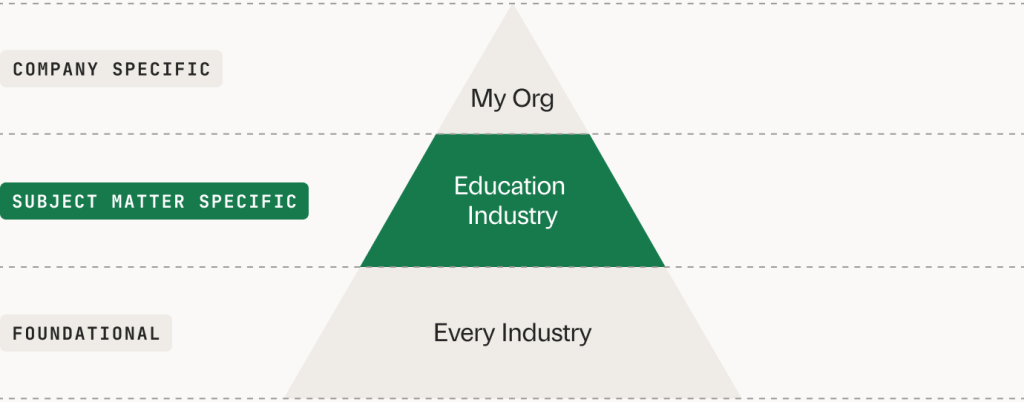
The first layer is evaluation needed by every AI product. These are evaluations that check to ensure the model followed instructions, didn’t hallucinate, and didn’t generate harmful content. This type of evaluation is table stakes, and getting it right matters for every AI builder, regardless of their industry. But this evaluation can only tell you whether your AI is behaving, not whether it is generating content with the nuance and specificity that makes it useful for a specific industry, like K-12 education.
One layer up are the evaluation needs specific to a given industry. In edtech, this could mean checking whether generated text is on grade level, whether feedback is optimized for a reader with specific challenges, and whether a generated lesson reflects sound instructional design. These problems are shared across edtech and require deep expertise in learning science to solve well.
At the top are evaluation needs of a specific product. This evaluation checks to ensure that generated content reflects a product’s or company’s brand voice, its internal content policies, and its commitments to partners. This evaluation is best for each product team to build independently.
Learning Commons Evaluators operate in that middle layer, creating the K-12 edtech-specific evaluation tools that can and should be common across all AI-enabled edtech tools. Building in this layer is harder than it looks. Defining what “grade appropriate” means, translating that into a rubric, annotating examples, and validating the result against expert human judgment requires sustained investment and access to learning scientists that most product teams do not have. Learning Commons has done that work — so integrating a Learning Commons Evaluator means you are not building or maintaining that expertise yourself.
How Learning Commons Evaluators work
Each Evaluator is built on a rubric, a structured set of criteria developed with learning scientists that defines what good looks like for that aspect of text quality. A single Evaluator covers one criterion. A family of Evaluators covers several, giving you a fuller picture of whether a text is working for the student it is meant to reach.
Learning Commons Evaluators are built in collaboration with Student Achievement Partners, Achievement Network, Quill.org and Leanlab Education, and tested for accuracy against human expert judgments. When an Evaluator flags something, the reasoning behind it reflects how a learning scientist would assess the same text.
How Learning Commons Evaluators can help
Here is where teams most often find them useful.
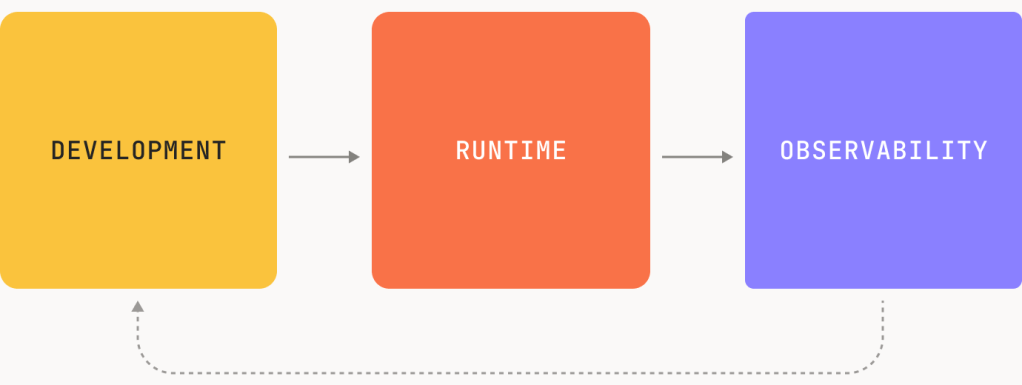
(Development) Optimizing AI prompts. Adding Evaluators to your test environment gives you a measurable signal for prompt iteration. Instead of judging outputs by feel, you can see which changes to your system prompts actually move scores on the dimensions that matter and which do not.
(Development) Model selection. Evaluators let you run the same prompts across multiple models, aggregate scores for each model, and compare results against quality criteria, so your model-selection decision is data-driven rather than subjective.
(Runtime) Auto-optimizing generated text. Integrated into your generation pipeline, Evaluators can check each output against your quality criteria before it reaches a user. If the rating falls outside your thresholds, your product can automatically ask the model to adjust.
(Observability) Monitoring output quality over time. Regularly run Evaluators on a sample of logged outputs to give your team visibility into how the quality of your AI-generated outputs changes as models and prompts evolve.
(Observability) Giving users visibility into content quality. Some products show evaluation of content directly to users in the product’s UI, letting them see how generated content performs. This builds trust and lets users request a simpler or more complex version before using the generated content in their classroom.
How to get started
Learning Commons Platform includes an Evaluators Playground where you can run your own text through the available Evaluators and see scores and rationales before integrating anything into your product.
For teams ready to build it into a pipeline, the SDK is the fastest way to get started. The docs also include Python notebooks and a tutorial on evaluating grade-level appropriateness as a starting point.